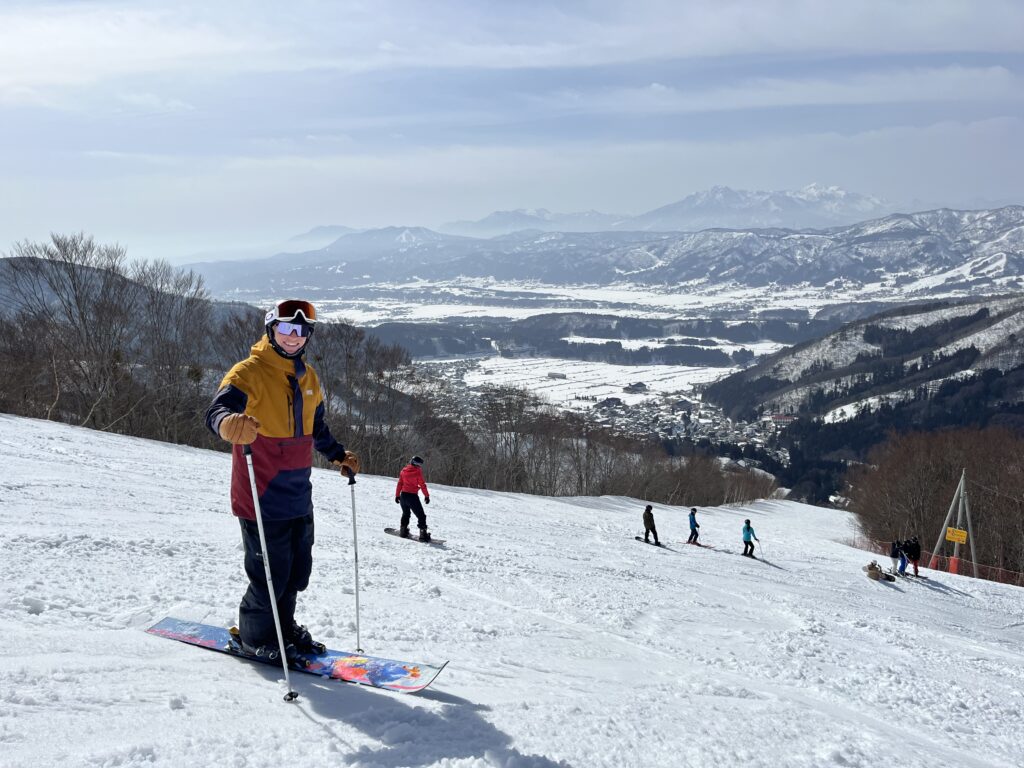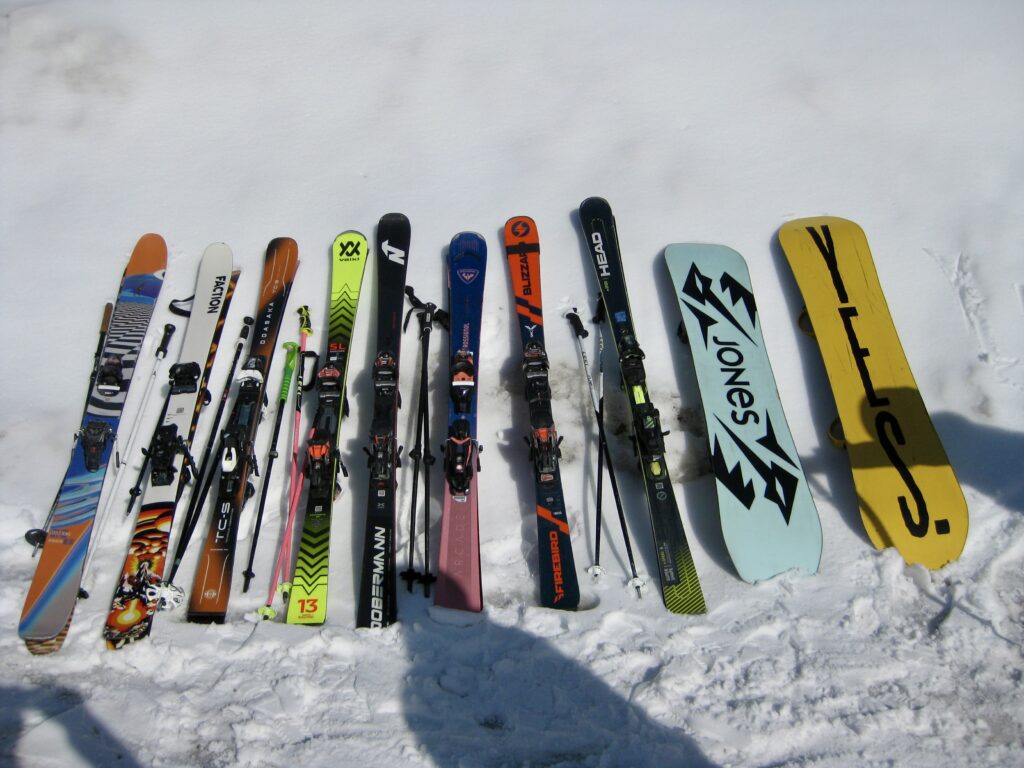
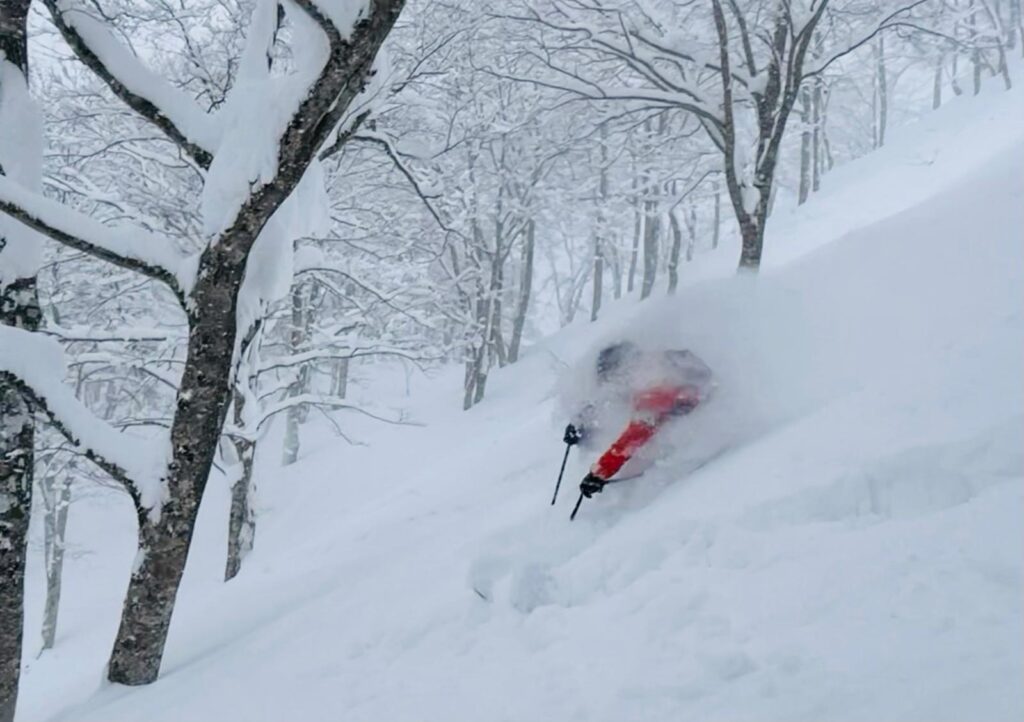
It was a full-blown blizzard. Visibility was almost gone, a deep powder day in Japan. My snowboarder friend dropped first and threw a big spray of snow into the air. I followed shortly after. The turns felt incredible. Snow is exploding around me. For a moment, everything felt effortless. Like I was floating.
And then suddenly the mountain disappeared.
Out of nowhere, I flew off a ledge. The soft powder stopped, and I landed hard on a cat track. Flat, compact snow that felt like concrete.
I was going fast. Probably around 50 km/h. Both skis released, and my body kept moving forward. I slammed into a violent scorpion. Then everything went black.
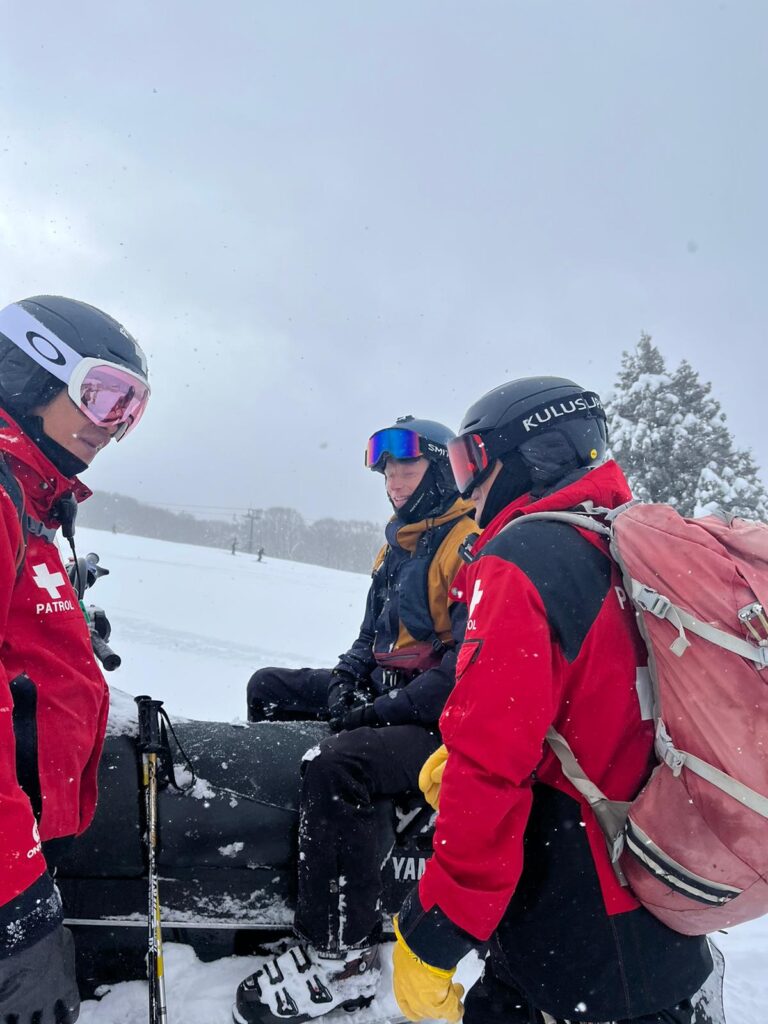
When I opened my eyes again, I knew something wasn’t right. My helmet was cracked, my face was bleeding, and my neck didn’t feel good at all. But adrenaline is a strange thing. I stood up anyway. Told myself it would be fine and skied further down to meet my friend.
Then I passed out again.
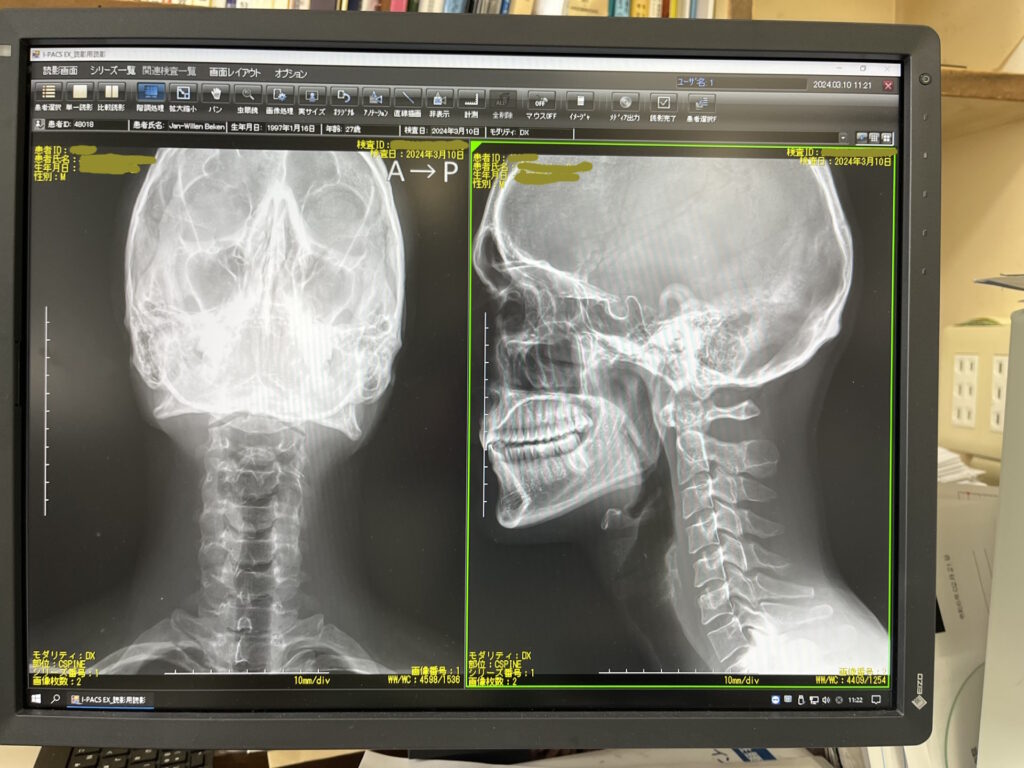
Later, sitting in the hospital waiting for an X-ray, I kept replaying the moment in my head. Trying to understand what had really happened.
But what stayed with me most was not the crash itself. It was the feeling I had before dropping in.
A quiet thought that said:
“This doesn’t feel right.”
But I went anyway.
Risk Rarely Comes Alone
Looking back, I see it wasn’t just bad luck. It was a combination of small things.
- The visibility was poor.
- The terrain was unfamiliar.
- I was following someone else’s line.
- The excitement of powder made me push harder.
- I was tired.
- And I wasn’t fully sharp, I had gone out the night before.
None of these factors alone would have caused a crash. Together, they became dangerous.
Most accidents result from several small mistakes at once, not just one.
They happen when several small risks stack on top of each other. In the mountains, in travel, and in life.
The Price of Ignoring the Signals
Right after the crash, I already knew it was serious. My neck wouldn’t move. For weeks, I could barely turn my head.
Months later, the real struggle started. The pain became constant. It was the first thing I felt when waking up and the last thing before falling asleep. After about a year, I reached a low point. I started to believe it might never get better.
What scared me most was not the pain itself.
It was the thought that I might lose the things that made me feel like myself. Skiing, travelling, and being outdoors.
During that time, I started writing down everything that helped me recover. Both physically and mentally. That eventually became my Whiplash Recovery Plan, a resource I now share with others going through a similar experience.
Ego Plays a Bigger Role Than We Like to Admit
So why did I take that run?
Part of the answer is simple: ego.
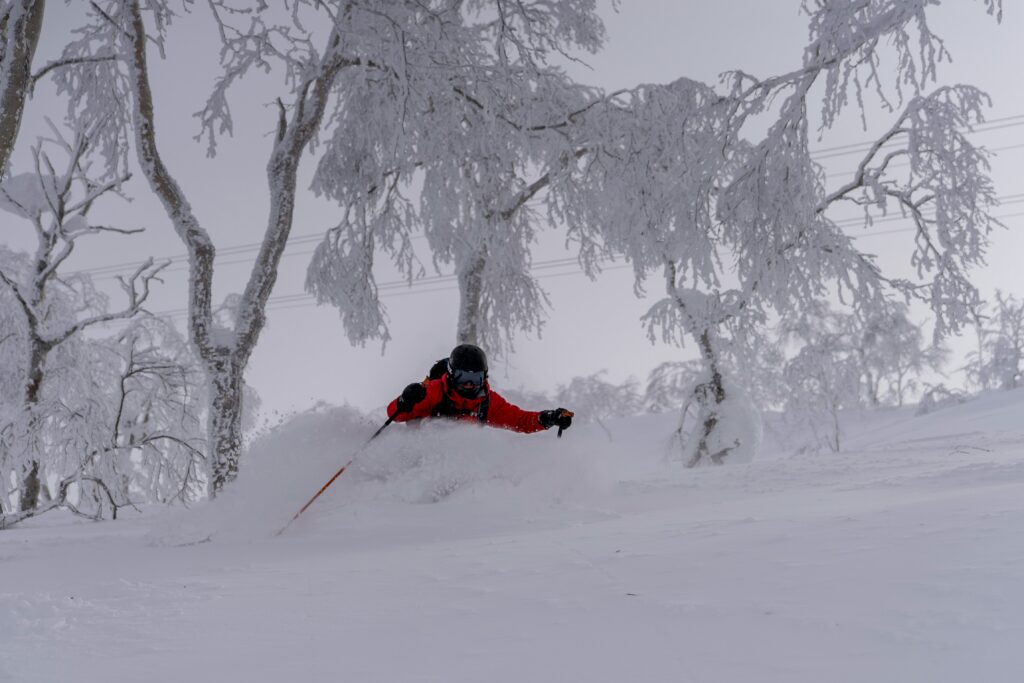
Not wanting to be the one who turns around. Not wanting to miss a good powder line. Ego doesn’t always feel like showing off. But it can push us forward when we should slow down or turn around.
Learning to Listen to Your Gut
Over time, I’ve learned to trust my gut.
It’s usually my unconscious telling me whether I should or shouldn’t do something, based on past experiences.
When something doesn’t feel right, there’s usually a reason. Now, when I stand at the top of a run, or when I face a risky decision in life, I ask myself one simple question:
“Is this run worth dying for?”
If the honest answer is no, I turn around.
Risk Isn’t the Enemy
It would be easy to say we should avoid risk completely. But that’s not realistic.
Adventure, growth, and meaning all involve uncertainty.
The real difference is between managed risk and blind risk.
You can’t remove risk from life.
But you can change your relationship with it.
The Real Lesson
I still chase powder days.
I still search for remote places.
I still believe adventure makes life richer.
But I’m no longer trying to prove how brave I am.
I’m trying to stay healthy enough to keep doing the things I love for many years to come.
Most runs aren’t worth dying for.
But a life without any risk doesn’t feel right either.
The challenge is to know when to risk. And when to walk away, so you can live for the next adventure.