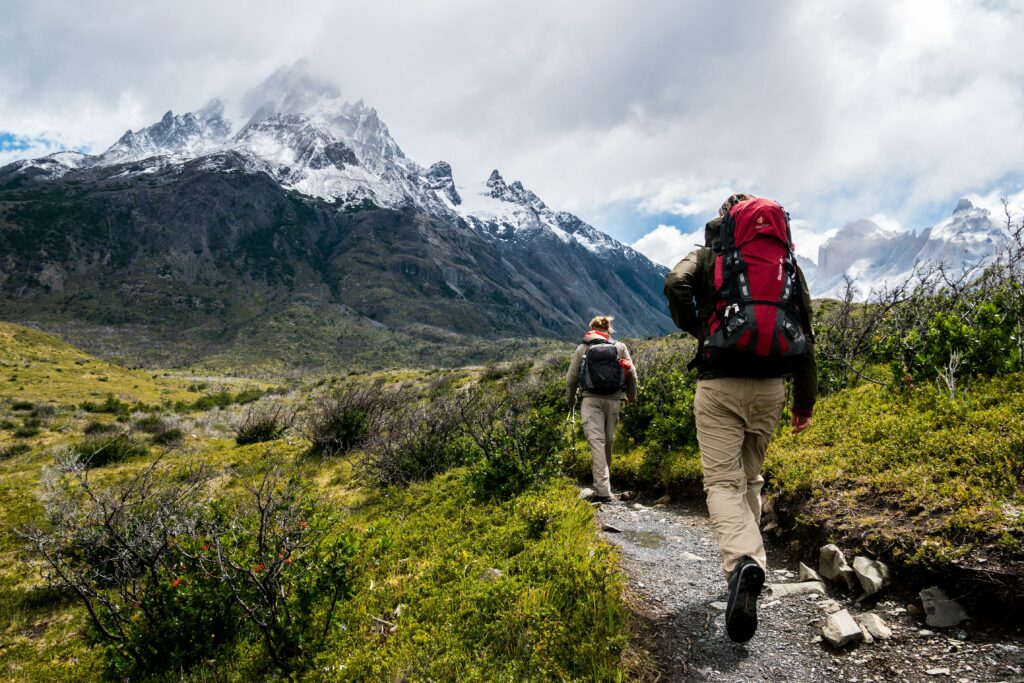
Over the years I’ve packed my bag for long backpacking trips across different countries and climates. I’ve overpacked, underpacked, carried useless gear for months, and forgotten simple things that would’ve made life easier. This isn’t a perfect or theoretical packing list, it’s what I actually bring on a backpacking trip and why.
Click here for a printable checklist ->
The Backpack Itself
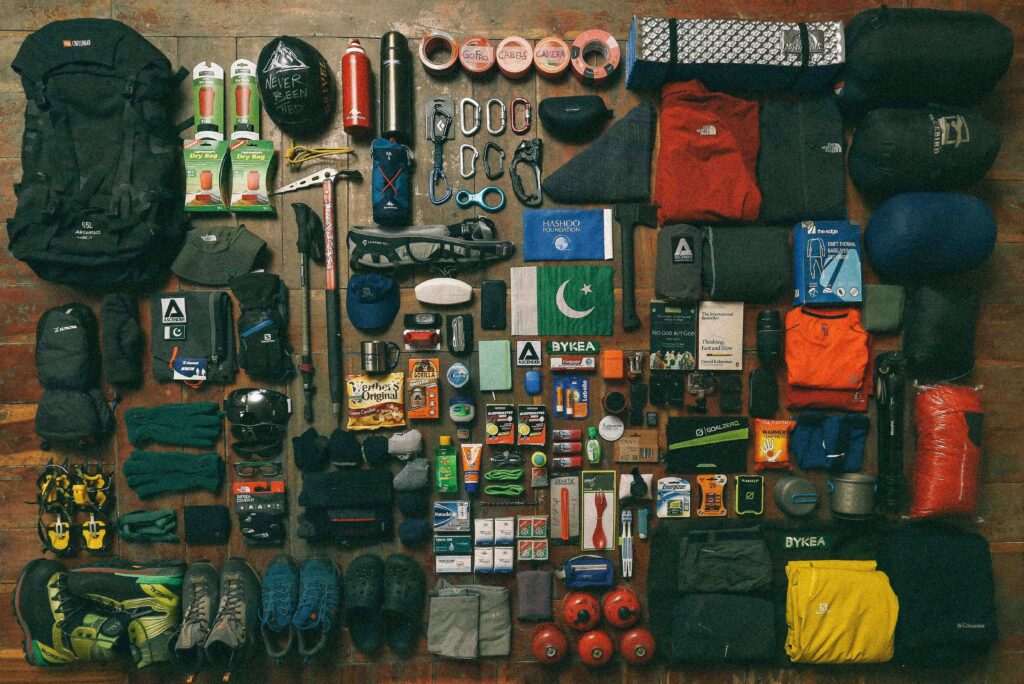
I use a mid-size trekking backpack (around 50–60L). Big enough for multi-climate travel, small enough that I’m forced to stay selective. Think of your backpack as your mobile home on the road, it’s important to choose one that suits your needs. I’ve been on the road with an Osprey Fairpoint 55 for the past five years, and I love this backpack.
I also carry:
- Day pack: A good daypack should have enough space to carry your daily essentials. If your essentials include just a bikini, towel, a refreshing beverage, and some snacks, a compact foldable daypack like this one is perfect. However, if your plans involve packing camera gear, I’d suggest opting for something a bit sturdier.
- Packing cubes: While not essential, I highly recommend getting a set of packing cubes. Packing cubes are little containers designed for organizing your clothing in your backpack. They make packing so much easier!
- Backpack cover: Bring a raincoat for your backpack. This will protect your backpack against dirt and rain while traveling. Just make sure you buy the right size for your backpack.
- Dry bags for electronics and documents
Essentials (Always With Me)
These never leave my bag and are stored together.
- Passport: You won’t get far without it. Pro tip: bring a couple of copies of your passport. You might need them while crossing borders at random police checks.
- Visa: Bring the correct visa while entering a country. Entering a country without one will result in a lot of problems. Trust me, I’ve been there. Here is a website where you can check up-to-date visa requirements. Make sure to always double check on the official goverment website.
- Credit Card & Debit Card: I always bring my credit card with me, it’s accepted in most places around the world. My debit card doesn’t always work while I’m abroad, so it’s good to have a backup. Make sure you don’t forget to change the region on your cards to worldwide. You won’t be able to withdraw money otherwise.
I like and personally use the Revolut card because it’s super easy to use, and it doesn’t take in a bunch of extra fees when you use it abroad. Plus, the app helps me keep a close eye on my spending, and I can top it up whenever I want to. - Money: While you can always withdraw money from an ATM in the country you’re visiting, it’s always a good idea to bring some extra cash. You never know when you need it. I typically stash an extra 100 USD somewhere in my backpack. I also suggest carrying dollars, given their widespread acceptance worldwide.
- Insurance: Insurance is important! Most of the time you won’t need it but you wouldn’t want to find yourself without it when you do. I recommend checking out different options for travel insurance in your country. Or go for an international one like Safety Wing or World Nomads.
- International driving license: You will need this in most countries if you want to rent a car or motorbike. Having an international driving license will prevent you from having to bribe corrupt police officers in case of road stops.
- Vaccinations: Make sure you have the correct vaccination needed to enter a country. Most countries in Central America require Yellow Fever vaccinations for example.
Clothing
Remember less is more, especially when it comes to clothing. Do I need 3 pairs of long pants? No, in my opinion, you don’t. I try to bring as little as possible and always end up bringing stuff I don’t use. If you end up needing something, you can always buy it when you get there. Make sure to check the climate of your destination before thinking about what to pack. After all, you wouldn’t want to be lugging around a heavy coat on a Thai beach or lounging in a bikini in the Arctic!
- 4–5 T-shirts: I usually pick up 1 or 2 more while traveling.
- 1 long-sleeve shirt: Nice to wear on colder days and great against mosquitos.
- 1 nice dress shirt: I always bring one button-up shirt with me in case I decide to dress up for a night out.
- 1 warm layer (fleece or sweater): They’re perfect for those cold overnight buses or chilly nights.
- 1 swimwear: Don’t forget your swimwear, especially if you are going to warmer climates.
- 1 hat: This will protect you against the sun.
- 1 lightweight down or insulated jacket: If going to colder places.
- 1 rain jacket: Invest in a lightweight rain jacket. They are easy to roll up and don’t take up too much space. I like this one.
- 1 pair of long pants: Choose something comfy but can also be worn if you decide to dress up for a party. You could bring a pair of jeans for example. I prefer bringing something a bit more lightweight like these pants.
- 1 pair of sport shorts: Not necessary but I like bringing one in case I want to go for a run. They make great pyjamas as well.
- 2 pair of shorts: 2 shorts should be enough. You will be probably wearing your swimming shorts more often than your normal shorts. If you are going to a colder climate, consider bringing an extra pair of long pants. For girls: bring 1 or 2 lightweight dresses if you want to.
- 4–5 pairs of socks and underwear: I found a week’s worth of socks and underwear is more than enough. You will just have to do laundry more often. I prefer using ankle socks and usually bring 2 pairs of long socks in case I need to cover my ankles for mosquitoes for example. Consider bringing socks and underwear made from merino wool, they dry fast and are pretty good at keeping odors at bay.
- 1 pair of thermos clothes: Depends where you are planning to go. I recommend bringing a pair if you go to South or Central America for example. It can get chilly at higher altitudes. Thermo clothes make a great base layer and don’t take up a lot of space.
- 1 travel towel: Pack a travel towel, it’s a must, especially for hostels or budget hotels where towels might not be provided. Unlike regular towels, these are lightweight, compact, and dry quickly, making them an essential addition to every backpack.
- Sunglasses
If it gets colder, I add thermal base layers instead of more bulky clothing.
Footwear
I try to keep it to two:
- Trail shoes or sturdy sneakers: You will likely be walking a lot during your travels. Choose something that is lightweight and dries rather quickly. My go-to travel shoes are the ON running shoes. I’ve slid down volcanoes, hiked jungles, and even used them as water shoes and they’re still holding up like champions.
- Flip-flops or sandals: Pefect for beach days.
- Water shoes don’t take up much space in your backpack and are often a must when doing water activities.
Only bring hiking boots if the trip really requires them. They’re heavy and annoying to carry.
Toiletries (Compact Version)
Nothing fancy, all small:
- Toothbrush + toothpaste
- Soap or shower gel
- Deodorant
- Razor & Shaving Cream
- Nail clipper
- Disinfectant gel
- Personal medicines
- Contraception (condoms, pill)
Small Medical & Repair Kit
I always carry a compact first aid kit because you never know when you or someone else might need it. I vividly remember using my iso blanket on top of Mt. Fuji when I was almost hypothermic, and being immensely grateful for bandages and plasters when I accidentally almost cut my thumb off with an axe in the middle of nowhere in Sweden.
My kit usually includes:
- Regular plasters
- A roll of bandage
- Painkillers
- Steri-strips (perfect for small stitches or sticking skin back together)
- Tick pliers
- Tweezers (ideal for splinters)
- Motion sickness pills malaria pills (depending on the region visited)
- Imodium tablets (trust me you will need them at some point during your travels)
- An ISO blanket
- Insect repellent
Electronics
This depends on your personal preferences. If you are fine just taking photos with your mobile phone I recommend not bringing anything else. This way you don’t have to worry about anyone trying to steal it. I always bring the following while traveling:
- Charger + cable
- Power bank
- Universal plug adapter
- Smartphone: Almost everyone has one nowadays. It is super handy for booking accommodation and researching travel destinations. Make sure to bring an unlocked mobile phone so you won’t have trouble installing a sim card in foreign countries.
- Laptop: If you’re just backpacking, I don\’t think it\’s necessary; it’ll just be a hassle to carry around. Your mobile phone should be good enough to book accommodation and other things. However, if you want to watch Netflix on a larger screen or need to work, feel free to bring it. It’s up to you. I usually travel with a cheap Chromebook to back up my pictures on a hard drive. If it happens to get stolen, it’s not the end of the world.
- Portable hard drive: Consider a portable hard drive as a reliable option for backing up all your images and files during your travels. Alternatively, if you\’re comfortable entrusting your data to Google, you can also opt for cloud backup.
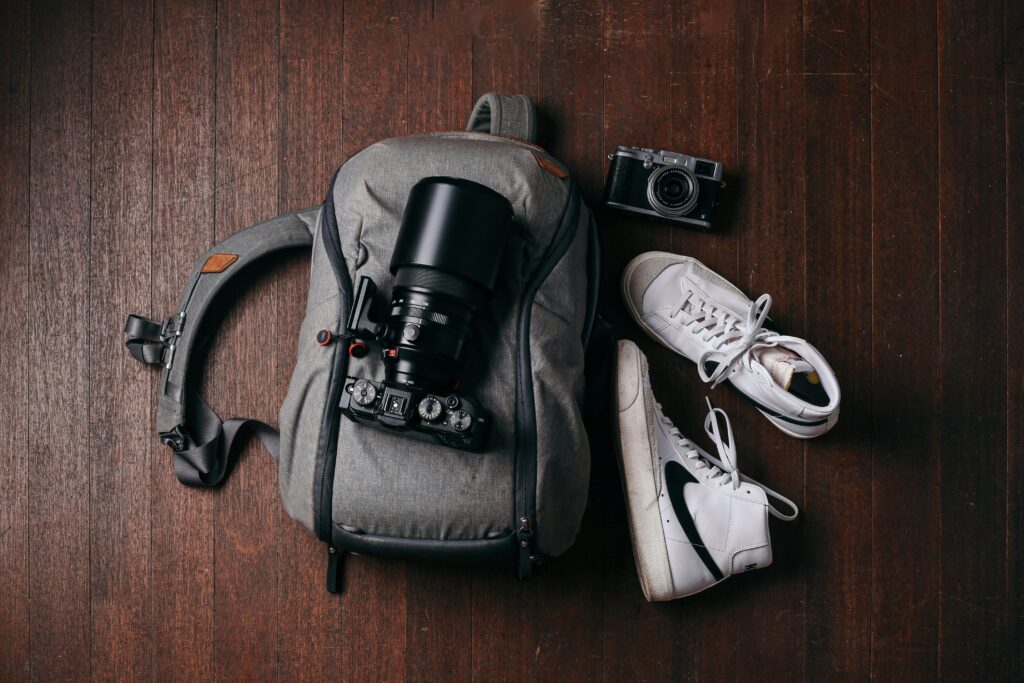
- Camera: If you enjoy photography, be sure to bring a quality camera. I used to carry a Canon 200D, but it ended up being bulky in my backpack and I didn’t use it as much, so I decided not to bring it anymore. Nowadays, I stick to using my mobile phone for regular pictures and a GoPro for action shots.
- Drone: I enjoy traveling with my drone because it allows for incredible video shots. However, many countries have strict drone regulations, so be sure to check them in advance. I chose not to bring mine to Central America because I knew it would cause too much trouble while crossing borders. If you do decide to bring a drone you should check out the DJI MINI 3, it’s a perfect lightweight drone for travelling.
Everything goes in waterproof pouches.
Useful Extras I Almost Always Pack
These are small but earn their place:
- Padlock: Many hostels have lockers but no padlocks, so make sure to bring your own.
- Sleeping bag liner: I always try to travel cheap and that has brought me to some really grim places to sleep. I recommend bringing a sleeping bag liner. It’s similar to a sleeping bag but really thin. This way you always have a clean sheet to sleep under in case you need it.
- Earplugs: Bring some earplugs especially if you are a light sleeper. Some hostels can be very noisy. Especially if the people below you in your bunk bed are getting a bit too cozy…
- Headlamp: A headlamp is something you probably don’t think about when packing your back. But they are sometimes really handy, especially when you are leaving early in the morning for a sunrise hike, or don’t want to wake someone else up by turning the main light on.
- Universal plug adapter: This is a must. There are a lot of different socket types around the world. I recommend this one.
- Sunscreen: You can always buy sunscreen at your destination. But in my experience sunscreen is usually cheaper back home. So it doesn’t hurt to bring a bottle with you.
- Pocket knife: I always carry a small pocket knife with me in my luggage, you never know when you need it. Just don’t take it with you on a flight.
- Notebook + pen: Handy for quick notes, directions, expense tracking, journaling, or writing things down when your phone is dead or wet.
- A few ziplock bags: Great for keeping documents and electronics dry, storing snacks, or separating wet and dirty items from the rest of your gear.
- Duct tape wrapped around an old credit card: Takes almost no space and works for quick repairs on gear, shoes, bags, or torn clothing.
- Zip ties: Lightweight and strong, useful for emergency repairs, attaching gear, or fixing broken straps and buckles.
Things I Stopped Bringing
After years of travel, I’ve learned to skip:
- Hiking boots: Unless you are going on a trip to hike every day, don’t bring big bulky hiking booths. They will only be a pain in the ass to travel with.
- Big-warm Jacket: Sure, you will need this when you go to Antarctica, but most times you will be fine without one. Depends on where you are planning to go.
- Too many books: Just bring one book. You can always exchange it with other travelers when you are finished reading it.
- Valuables: Make sure not to bring too many valuables. You will only risk losing them. Carrying fewer valuables will ease your mind during the trip.
Unnecessary items
Lay out all the items you intend to bring for your trip and reassess each one. Ask yourself, ”Do I really need this, or will this just be a burden to carry?”
My Packing Philosophy
That’s all! I hope you found this information helpful. I’ve highlighted all the items I believe are essential for an incredible backpacking adventure. If you think something is missing from my list, let me know in the comments and I’ll see if I can do it. Keep in mind, that less is more. You don’t need a ton of things; even after five years of travel, I still return with unused items. You’ll likely find yourself carrying less with each new trip. Safe travels!