
Ever wished you could stay in Japan a little longer, long enough to settle in, work a bit, and experience daily life instead of rushing from place to place?
Japan offers a Working Holiday Visa, which allows young people to live in the country for up to a year while working part-time to support their travels. It’s one of the easiest ways to experience Japan beyond tourism.
This guide walks you through the requirements and application process, based on my own experience applying from the Netherlands.
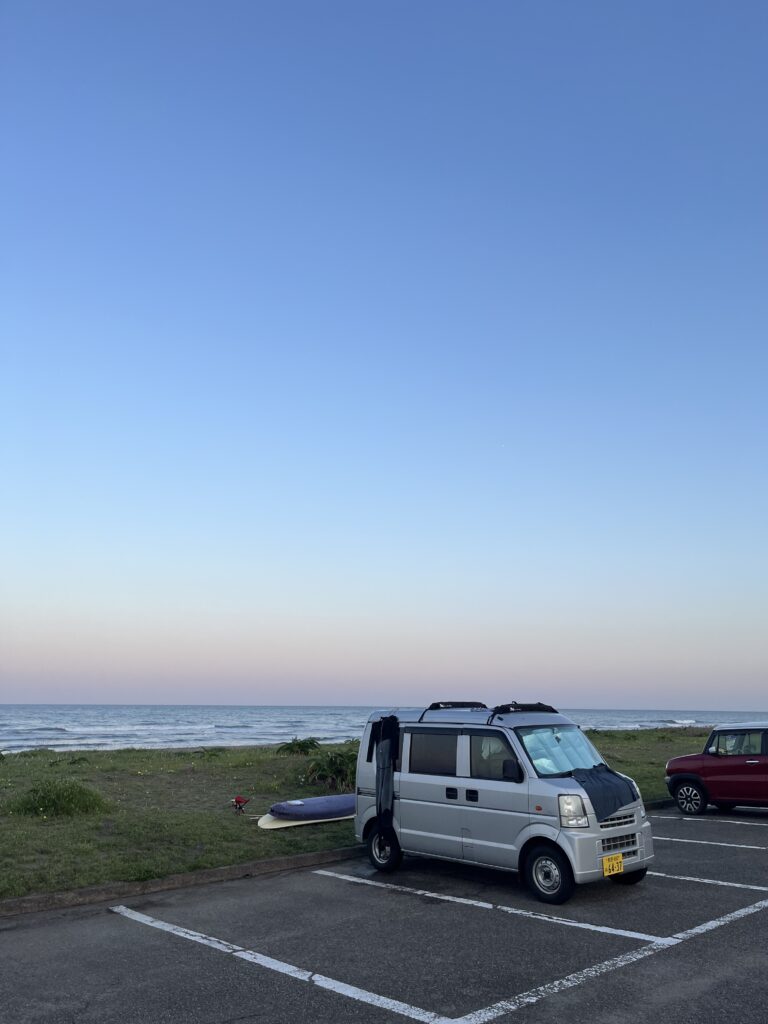
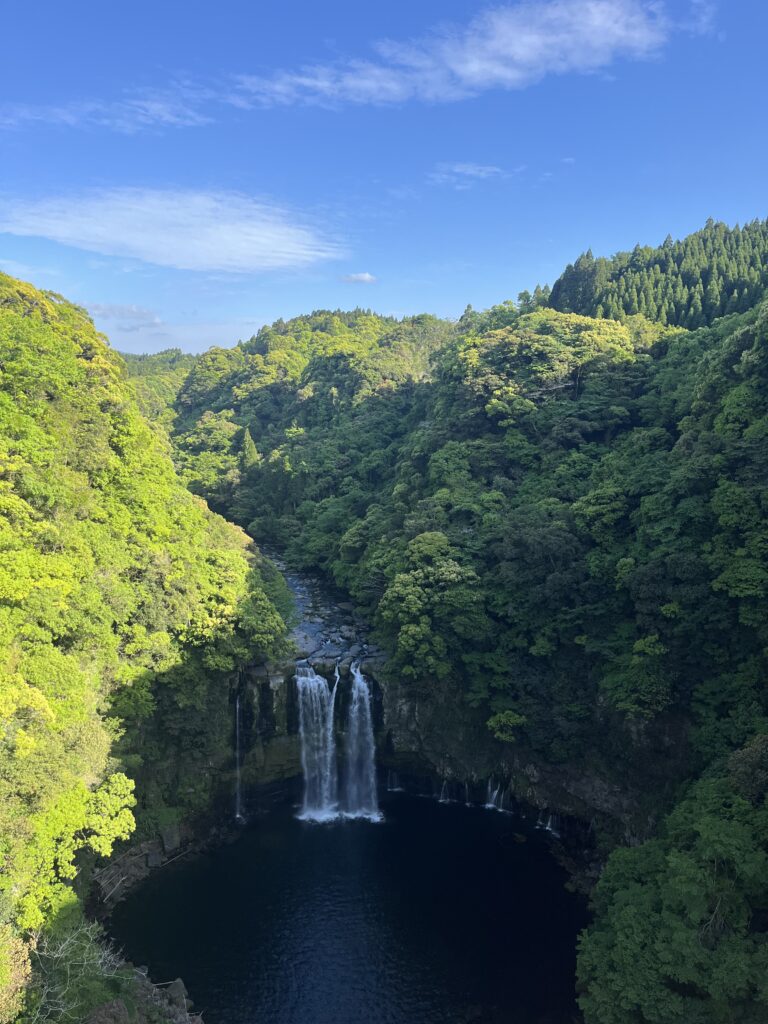
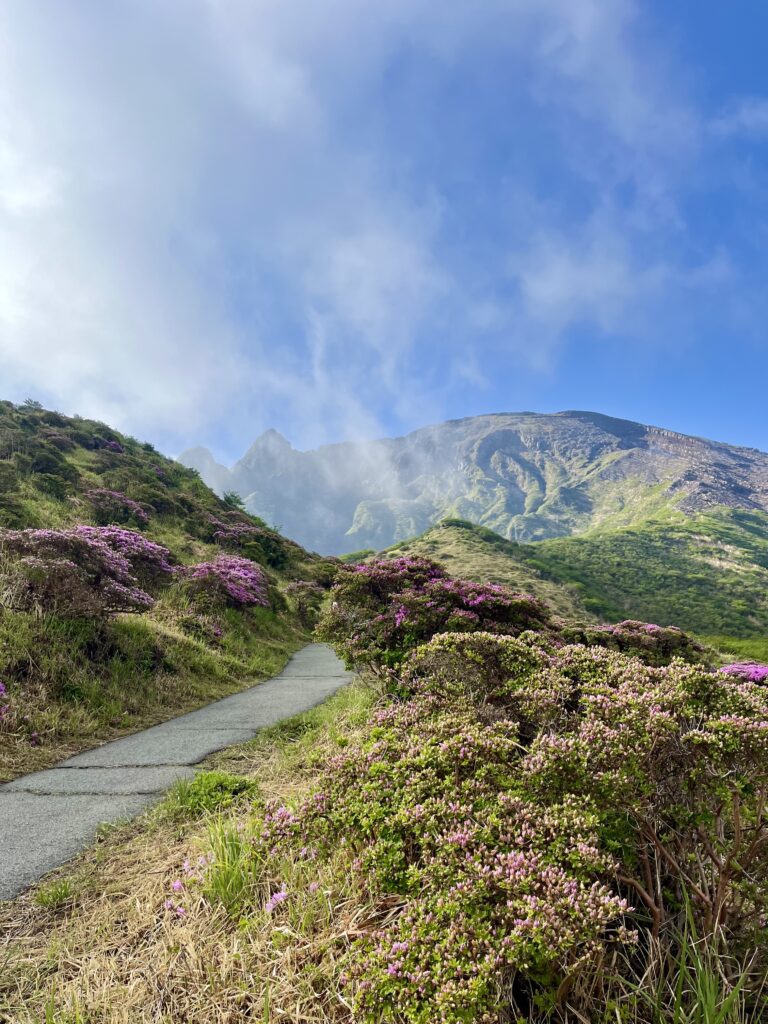
What is a Working Holiday Visa?
A Working Holiday Visa allows you to:
- Live in Japan for up to one year (Some countries allow you to stay up to 18 months, check with your embassy.)
- Work part-time to support your stay
- Travel freely and experience daily life
The purpose of the visa is cultural exchange. Working is allowed, but it shouldn’t be your main reason for being there.
If that sounds appealing, keep reading.
Who can apply?
Not everyone is eligible. Before applying, make sure you meet all the requirements.
Age
You must be between 18 and 30 years old at the time of application
(Some countries allow applications up to 35, check your local embassy.)
Nationality / residence
You must be a resident of one of the following countries:
New Zealand, Canada, Republic of Korea, France, Germany, United Kingdom, Ireland, Denmark, Taiwan, Hong Kong, Norway, Portugal, Poland, Slovakia, Austria, Hungary, Spain, Argentina, Chile, Iceland, Czech Republic, Lithuania, Sweden, Estonia, Netherlands, Uruguay, Finland, Latvia.
⚠️ Many countries have annual quotas. Always check availability with your local Japanese embassy before applying.
Valid passport
Your passport must be valid for the entire duration of your stay.
Sufficient funds
You must prove you can support yourself initially.
For Dutch citizens:
- €3,800 with a one-way flight
- €1,800 with a return flight
Amounts vary by country, always check your local embassy website.
The application process (Netherlands example)
This section describes the process for applying from the Netherlands. Most countries follow a very similar procedure, but always verify requirements with the Embassy of Japan in your country.
1. Valid passport
Your passport must cover the full intended stay in Japan.
2. Visa application form
Download this from the embassy website.
- If you don’t know your address yet, using a Tokyo address from your hostel is fine
- I used a dummy flight booking for travel details. Because I didn’t want to buy an actual ticket yet.
3. Passport photo
- Size: approx. 35mm × 45mm
- Taken within the last 6 months
4. Curriculum Vitae (CV)
Some embassies provide a basic CV template. This is my CV using the embassy’s template.
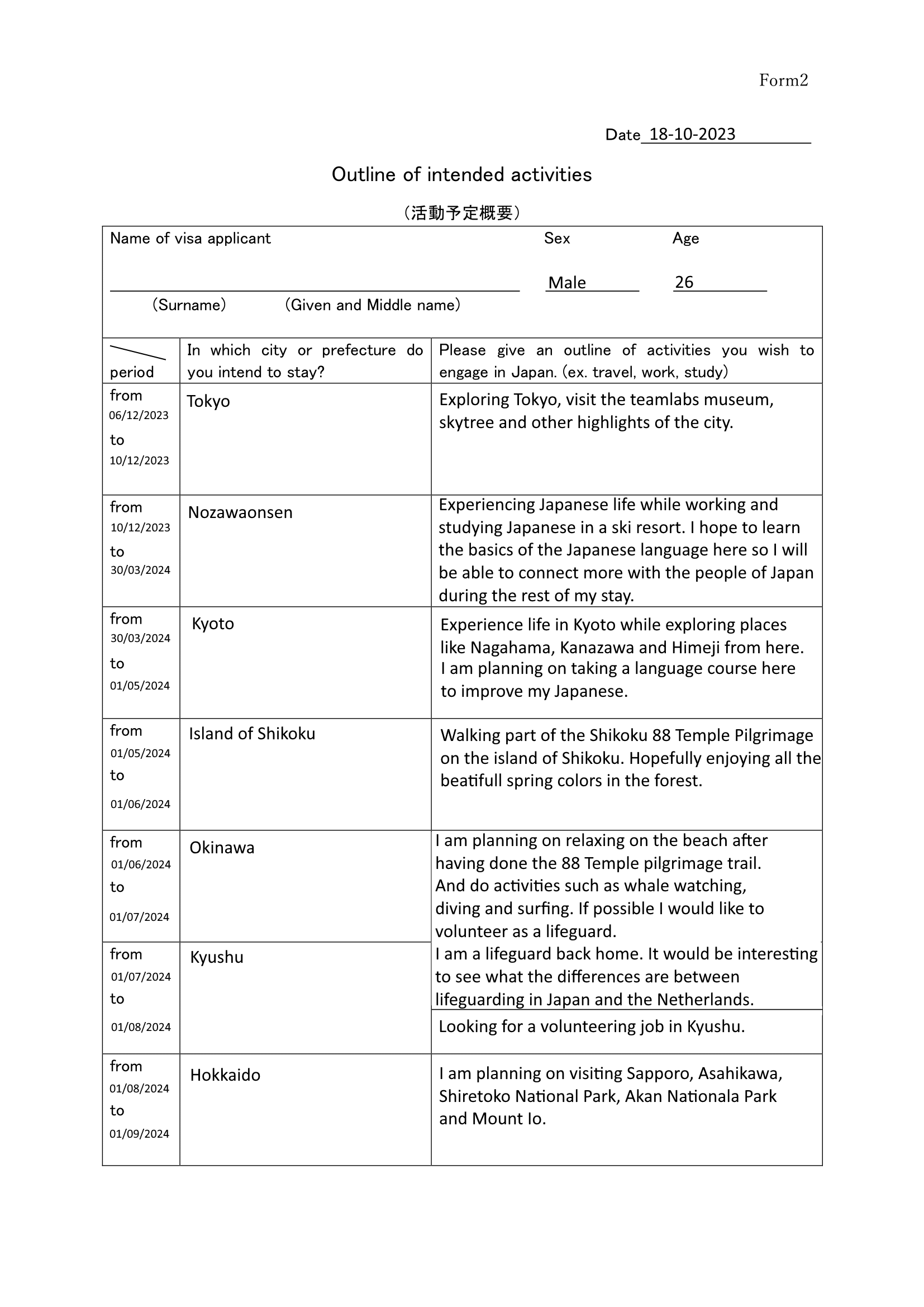
5. Outline of intended stay and activities
This doesn’t need to be perfect.
They know you can’t plan an entire year in advance.
Just give a rough outline of what you’d like to do (travel, learn Japanese, ski season, cultural exploration, etc.).
6. Written motivation letter
This is important.
They want to see that:
- You’re interested in Japanese culture and language
- You’re not going only to work
I focused on learning Japanese and experiencing daily life in Japan.
(You can keep this honest and simple, no need to exaggerate.) Click here for my example.
7. Flight booking confirmation
You do not need to buy a real ticket yet.
I used a paid dummy booking (€20), which worked perfectly.
8. Proof of sufficient funds
A recent bank statement showing the required amount
(Usually between €1,800–€5,000, depending on nationality.)
9. National Health Insurance pledge
Some embassies require a pledge for Kokumin Kenko Hoken (Japan’s national health insurance).
Check your local embassy website.
Submitting your application
Submission rules vary by country.
In the Netherlands:
- No appointment was required
- I could simply walk in
After submission:
- Documents were checked on the spot
- My visa was ready 5 working days later
Important: visa validity
Once granted, the visa has a validity period (usually 3 months) — this means you must enter Japan within that time.
The one-year stay starts the day you arrive, not when the visa is issued.
Can I use a JR Rail Pass?
No.
On a Working Holiday Visa you are considered a resident, so you are not eligible for the JR Pass.
How much does the visa cost?
The visa itself is free.
Some embassies may charge a small processing fee, I didn’t pay anything in the Netherlands but this varies per country.
How many times can I apply?
Most countries allow this visa only once, but some countries allow it to be used twice.
How long does it take?
Usually 1–2 weeks.
Mine took 5 working days.
Are there work restrictions?
Yes.
You may not work in:
- Bars
- Nightclubs
- Cabarets
- Gambling establishments
- Any business affecting public morals
Can I leave Japan and re-enter?
Yes, but you must obtain a special re-entry permit at the airport before leaving.
Do I need to speak Japanese?
No, but even basic Japanese makes life much easier and helps with jobs and daily interactions.
Final note
The information in this article was accurate as of January 2026.
Visa rules and requirements can change, so always verify the latest details with your local Japanese embassy before applying.