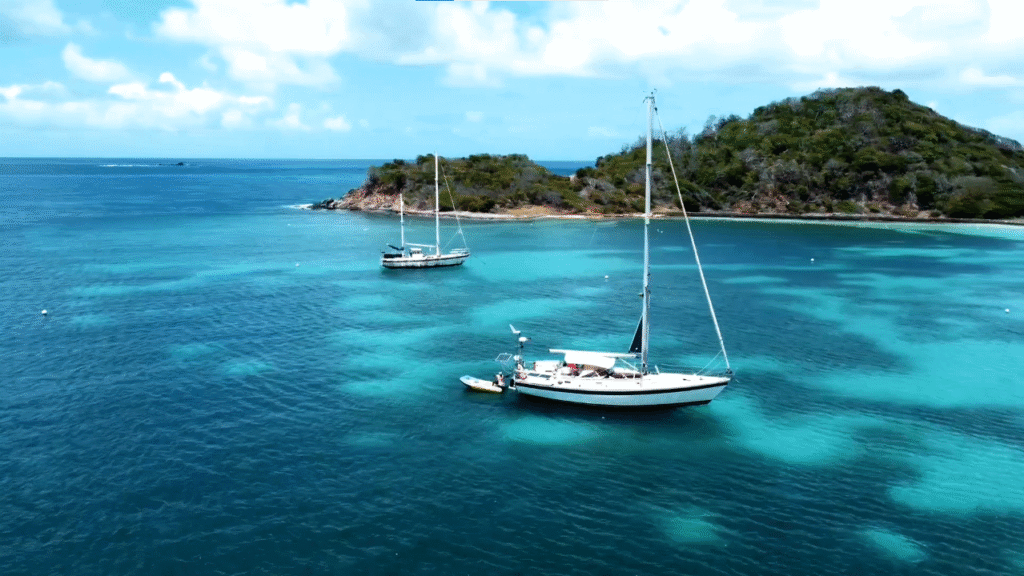
Seasickness is one of the most common concerns before sailing. Whether it’s a day trip, coastal passage, or longer voyage. Some people never feel it, many feel it briefly, and most improve after their body adapts to the motion.
Does Everyone Get Seasick?
No, but it’s common.
- Some people never get seasick
- Many feel unwell for the first 1–3 days
- Most improve as their body adjusts
- A minority of people continue to experience seasickness even after extended time at sea.
I personally get seasick pretty easily. Sometimes it’s just a bit of uneasiness on short trips, but other times it can get bad enough that I’m throwing up every few minutes and only feel somewhat okay when I lie down. Don’t worry though, I’m definitely on the extreme end of the scale. I rarely meet anyone who gets as seasick as I do, and most people are totally fine. In this article I’ll share my experiences and a few things that can help if you’re prone to seasickness.
Why Seasickness Happens
We get seasick when the brain receives conflicting signals about movement from the inner ear, eyes, and body. On a boat, your inner ear feels the motion of the waves while your eyes may see a stable environment, which confuses the brain. This sensory mismatch can trigger nausea, dizziness, and vomiting, what we call seasickness.
When Seasickness Usually Happens
Most often:
- During the first days aboard
- When feeling stressed
- When going below deck
- After poor sleep
- With an empty stomach
- When dehydrated
Conditions That Make Seasickness Worse
Certain motion patterns are harder to handle, like waves hitting from the side and motoring straight into waves. You’ll also feel it more if you stay near the bow or sit inside without an outside view, and when you’re cold, wet, and tired. If you’re prone to seasickness, avoid the front of the boat, the middle or back usually has less motion and is easier on your stomach.
What Seasickness Feels Like
- Nausea
- Low appetite
- Fatigue
- Dizziness
- Sweating or chills
- Worse when moving around
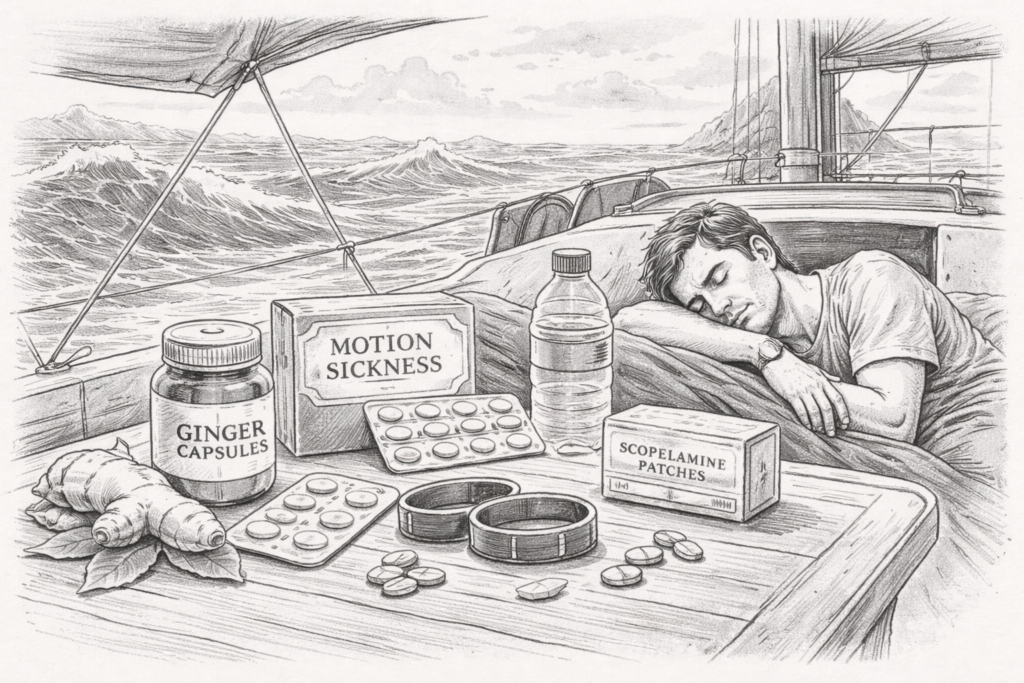
Seasickness Remedies That Help (Based on my experience)
1. Motion Sickness Pills
These helped a bit, especially early on.
Pros
- Reduced nausea
- Easy to use
Cons
- Drowsiness
- Dry mouth
- Mental fog
Useful for short passages or emergencies, but not ideal long-term for everyone.
👉 Good to test before departure.
2. Scopolamine Patch (Behind the Ear)
A stronger, long-acting option.
My experience
- Effective against nausea
- Strong side effects for me
I experienced disorientation and vivid dreams or hallucinations. Sleep deprivation likely played a role, but the effects were strong enough that I stopped using it.
👉 Effective, but not light, make sure to test before using it at sea.
3. Ginger (Capsules, Tea, Candy)
Ginger helped gently.
- Calmed my stomach
- Took the edge off nausea
It wasn’t a cure, but it was one of the few things I consistently tolerated.
👉 Low risk, easily available everywhere.
4. Acupressure Wristbands
These didn’t work for me personally.
That said, they’re inexpensive and non-medicated. Some sailors swear by them.

5. Hydration (very important)
Dehydration makes seasickness worse.
What worked best:
- Small sips, often
- Water or electrolytes
If you’re nauseous, you may drink less without noticing.
👉 Hydration is very important, you lose a lot of fluids when throwing up, so make sure to keep drinking small amounts regularly.
6. Eating at Sea: When & What
An empty stomach made nausea worse.
A heavy meal also made it worse.
Best approach:
- Eat small amounts
- Eat regularly
- Stick to plain foods (crackers, bread, rice)
7. Lying Down
Lying down almost always helped.
Especially:
- On your back
- Near the center of the boat
If you can safely rest, do it.
A Seasickness Remedy I Haven’t Tried (Yet)
Non-Drowsy Allergy Tablets (Loratadine / Claritin)
Several sailors recommended once-a-day allergy tablets commonly used for hay fever.
Why they’re interesting:
- Non-drowsy
- One tablet per day
- Fewer side effects than traditional motion sickness meds
I haven’t tested this myself yet, but I plan to and will update this article if I do.
Final Thought
Seasickness is common and strongly influenced by sea state, sleep, and hydration. Most people adapt within a few days. Starting remedies early, eating lightly, staying hydrated, and choosing low-motion positions onboard makes a big difference.