Hi, my name is Jan–Willem. I’m the person behind Expedition Coconut.
For a long time, I thought I was supposed to have it all figured out. A clear career path, a five-year plan, a direction that made sense to everyone around me.
Instead, my timeline turned out a bit more chaotic.
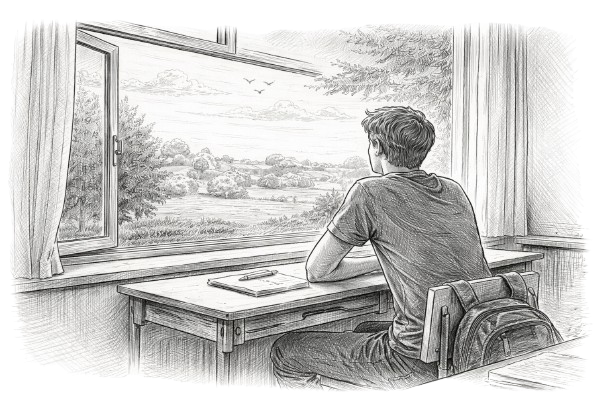
Looking back, my school years were more stable than I realised at the time. There was structure, routine, and a built-in direction. Wake up half asleep, bike to school, sit through classes, joke around with friends, drift off during lessons. Days repeated themselves in a predictable rhythm. No one expected you to know exactly where you were going yet.
I didn’t dislike school. I just spent a lot of time staring out of windows. Not thinking about grades or careers, but about travel, building things, being outdoors, doing something that felt meaningful, without knowing what that actually meant.
What made that phase feel calm, I see now, was the foundation underneath it. A safe home, education and time. When the basics are covered, the future feels wide instead of urgent.
After graduation came that strange in-between period. Freedom at first. No bells, no fixed schedule. Then the questions started appearing.
- What are you going to study?
- What’s your plan?
- What kind of job do you want?
They’re normal questions. But when you don’t have clear answers, they start to feel heavy.
Civil engineering sounded solid and reliable, so I chose it.
From the outside, it looked like steady progress. Lectures, projects, exams. Nothing went wrong. But inside it felt fairly neutral. Not terrible, but not excited either. I kept assuming motivation would show up later.
It didn’t.
What I understand better now is that the “safe path” rarely feels like a big decision in the moment. You don’t consciously choose safety over curiosity. You just follow the road that’s already there. It works, the people around you approve, so you stay on it.
There’s nothing wrong with that path. But it’s easy to stay on it longer than it fits.
I used to think clarity had to come before action. Now I think it often works the other way around. You move first, then you learn. And you can always adjust if it doesn’t work out the way you like it.
That phase taught me something simple: stability is valuable, but it doesn’t automatically create direction. Direction tends to reveal itself once you start testing things outside of your comfort zone.