Over the years I’ve packed my bag for long backpacking trips across different countries and climates. I’ve packed for canoe adventures, motorbike trips across remote terrain, and multi-day hikes in the mountains. I’ve overpacked, underpacked, carried useless gear for months, and forgotten simple things that would’ve made life easier.
This outdoor backpacking packing list works for multi-day hikes, wilderness camping trips, canoe expeditions, and remote motorbike adventures.
If there’s one rule that always holds up, it’s this:
Pack light.
Whether you’re hiking, riding a motorbike, or paddling a canoe, every extra kilo costs energy.
Click here for a printable checklist ->
The Backpack Itself
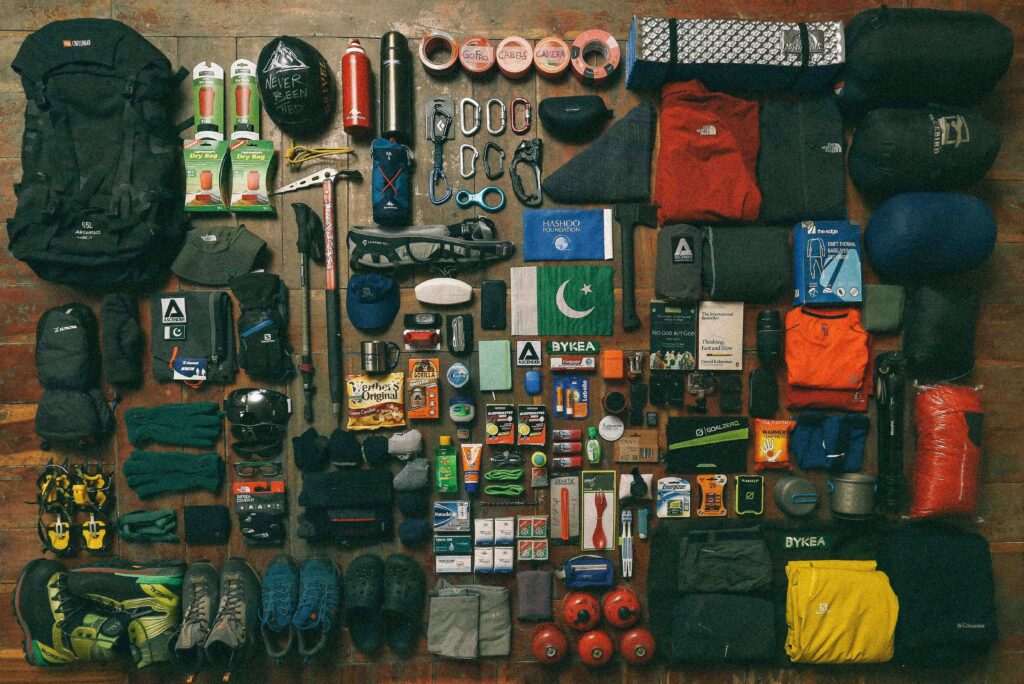
For outdoor trips, I use the Osprey Farpoint Trek (50–60L range).
I traveled for years with the regular Osprey Farpoint 55, which is great for general travel. But once I started doing more hiking and outdoor-focused trips, I switched to the Trek version. It has much better padding, a proper adjustable back system, and carries weight far more comfortably on long hiking days.
For me, 55 liters is the sweet spot. Anything bigger just becomes heavy and tempting. A larger backpack doesn’t mean more comfort. It usually just means I start bringing unnecessary stuff. Keeping it around 55L forces me to stay selective and pack smarter.
I also carry:
- Rain cover for your backpack (always bring one)
- Dry bags in case your backpack gets wet
- Sometimes a small foldable daypack for summit hikes or short explorations
Think of your backpack as your mobile home. If it doesn’t fit well, everything becomes harder.
Shelter & Sleeping System
This depends on the type of trip.
Shelter
- Lightweight tent (1 or 2 person)
- Groundsheet
- Stakes & guy lines
- Mosquito net
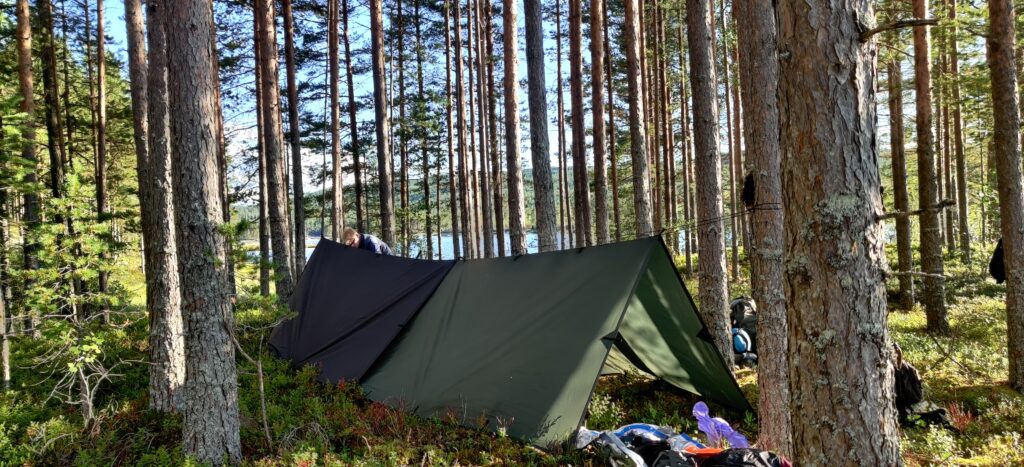
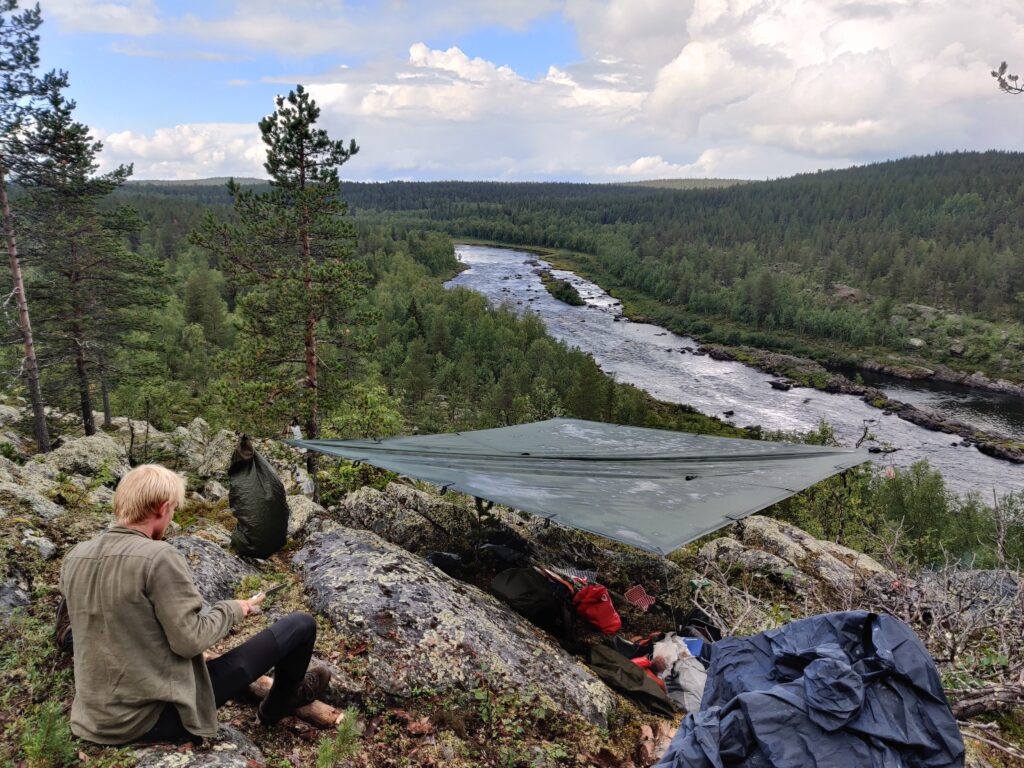
- Optional: tarp for extra rain protection
On some trips, I only bring a tarp. It’s lighter and more versatile. However, a tent can be more comfortable, especially in areas with a lot of bugs.
Sleeping System
- Season-appropriate sleeping bag
- Sleeping bag liner (keeps your sleeping bag cleaner and can add extra warmth)
- Sleeping pad (inflatable or foam)
- Compact pillow (I usually just use one of my packing cubes filled with clothes or a hoodie).
I’ve learned that a good sleeping pad matters more than a fancy sleeping bag. Cold from the ground will drain your energy fast. And a good night of sleep is important for recovery after a long day of hiking.
Clothing (Layer System)
Clothing is where most people overpack.
For outdoor backpacking, I stick to a simple layering system:
Base Layer
- 2–3 moisture-wicking T-shirts (merino or synthetic)
- 1 long-sleeve shirt (great against sun and mosquitoes)
- Thermal base layer (if going into colder climates)
Mid Layer
- Fleece or lightweight sweater
Outer Layer
- Lightweight rain jacket (essential)
- Lightweight down or insulated jacket
Bottoms
- 1 pair of hiking pants
- 1 pair of shorts (can also be used as swimming shorts)
- 4–5 pairs of socks and underwear (merino if possible)
I don’t bring three pairs of pants anymore. If something gets dirty, I wash it.
Pack for the climate your are travelling in.
Footwear
I try to keep it to two:
- Trail shoes or sturdy sneakers – Lightweight, quick drying, versatile.
- Sandals or flip-flops – For camp around the camp.
I only bring heavy hiking boots if the trip really demands them. Otherwise, they’re just extra weight.
For canoe trips, I sometimes add lightweight water shoes.
Food & Cooking Gear
- Compact camping stove
- Gas canister
- Lighter (bring two)
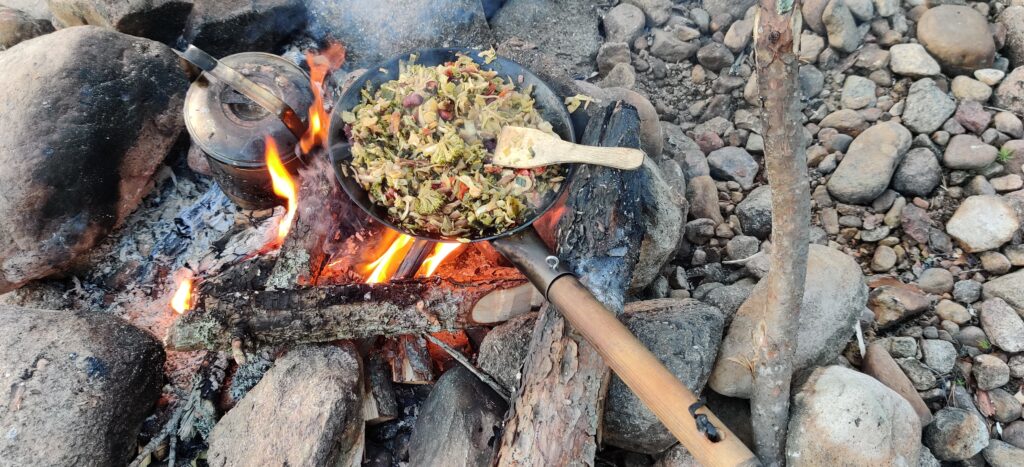
- Lightweight cooking pot (I like to bring a billy can, it also works great over a campfire).
- Spork
- Knife (I usually skip bringing a spatula since you can easily carve one from wood).
- Simple meals (oats, rice, pasta, nuts, dried food)
- Backup food (freeze-dried meals in a bag)
Water System
Water is very important, always carry more than you think you will need.
- 2–3L water capacity
- Water filter
- Backup purification tablets
Essentials & Documents
These always stay in a waterproof pouch.
- Passport (+ copies)
- Visa (if required)
- Credit card + debit card
- Some emergency cash (I usually carry $100 USD hidden somewhere)
- Travel insurance details
- International driving license (for motorbike trips)
I personally use a Revolut card when traveling because it keeps fees low and lets me track spending easily.
Navigation
I always download offline maps (maps.me) before heading into remote areas. Technology fails and batteries.
- Physical map
- Compass
- Offline maps (downloaded on phone)
- GPS device (optional)
Small Medical & Repair Kit
I always carry a compact first aid kit. You never know when you need it.
My kit includes:
- Plasters
- Bandage roll
- Painkillers
- Steri-strips
- Wound gel (for desinfection)
- Tweezers
- Tick pliers
- Insect repellent
- ISO blanket
- Imodium
- Any personal medication
Small Repair Items
- Duct tape wrapped around an old credit card
- Rope
- Zip ties
- Needle & thread
Leave No Trace
When you spend time outdoors, you also take responsibility for the places you visit.
I always carry:
- Small trowel – For proper toilet use. Dig a cathole away from water sources and trails.
- Biodegradable soap – Use sparingly and never directly in rivers or lakes.
- Trash bag – Make sure you don’t leave anything behind.
Nature gives a lot. The least we can do is leave it as we found it.
Electronics (Minimal Setup)
I try to keep electronics simple.
- Smartphone
- Charger + cable
- 2 Power banks
- Universal plug adapter
- Headlamp
If I’m filming, I add:
- GoPro
- Drone (only if regulations allow)
Useful Extras (Depending on the Trip)
Everything goes in waterproof pouches.
- Padlock – Useful for hostels or securing gear.
- Earplugs – Wind, wildlife, or noisy campsites.
- Sunscreen – Especially important at altitude or on long days on the water.
- Hat & sunglasses – Sun exposure drains energy quickly.
- Gloves – For cold mornings, paddling, chopping wood, or rough terrain.
- Buff / neck gaiter – Protects against sun, wind, dust, or cold. One of the most versatile items you can carry.
- Travel towel – Lightweight and quick-drying. Great for swimming, washing, or unexpected rain.
- Sitting pad – A small foam pad makes breaks and cold campsites much more comfortable.
- Notebook + pen – Notes, route planning, journaling.
- Ziplock bags – For documents, electronics, food, or separating wet gear.
- Book – One lightweight book for downtime.
More Outdoor-Oriented Extras
- Small axe – If you’re in an area where fires are allowed.
- Foldable saw – Often safer and more efficient than an axe for processing wood.
- Minimal fishing gear – A simple hand line or compact setup can be enough.
- Multi-tool or knife – Always useful.
- Fire starter (backup) – Ferro rod, waterproof matches, or fire starters. Never rely on just one lighter.
- Lightweight cordage (paracord) – Shelter setup, repairs, clothesline.
- A few carabiners – Handy for attaching gear or organizing camp.
This is the outdoor backpacking gear list I personally use. It’s not perfect, but it’s field-tested. Over time, you’ll adjust your own list and it will get lighter with every trip.
Interested in More?
If you’re planning your own adventure, these might help:
- Backpacking Packing List – A simple checklist you can download and use before your next trip.
- Canoe Trip on the Ivalojoki River – A detailed guide to paddling through the Finnish wilderness.
- Essential Travel Apps – The apps I actually use for navigation, booking, and staying organized on the road.